Category Archives: Boat Details

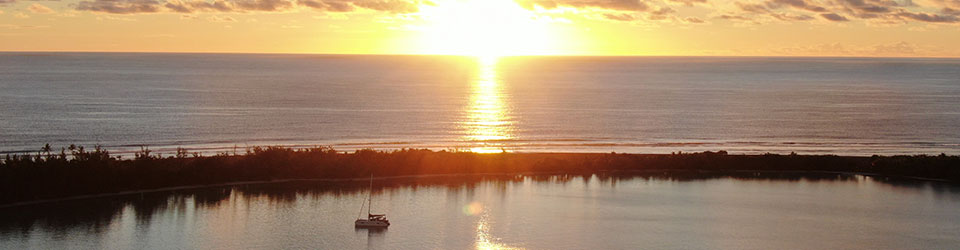
View from Unit 7 at Manuel Antonio Estates

Manuel Antonio Estates: Short-Term Rental

How did we end up living with the monkeys at Manuel Antonio Estates?  Well, Sugar Shack was struck by lighting (a story we will share once the boat is repaired) and had to be hauled out. Once she was hauled out, we became homeless because Marina Pez Vela does not allow live aboards on the yard.

The marina arranged a room for us at the Best Western Kamuk at a discounted rate for the first couple of nights.  This was great for the weekend, as they were close to the marina.  But at $68 per night , for 3 months, it would break the already broken bank.

The first three nights we stayed in a small room over a crowded street, but the last night we moved to the top floor which notably had a great view of the beach.

View from Best Western Kamuk Hotel

View from Best Western Kamuk Hotel

The marina connected us with real estate guru, Alvin who showed us a few short term rental properties.  We ended up at Manuel Antonio Estates which offered  AC, wifi, a pool, and a full kitchen. Remarkably, most apartments don’t have ovens.  I have grand plans of baking for our boat workers so an oven was a must have.

We negotiated a lower rate which included all of the utilities, maid service twice a week, and moved in the next day.

Nestled in the trees are 9 apartments overlooking a pool and the dense foliage below.  Once you pass the guard gate, you walk up a hill, past the Rain Drop Spa (top left), to the main reception area (top right).

Then you climb up another hill to the apartment units (2nd row, left) which overlooks the pool.  We have lots of wildlife, including iguanas, geckos, monkeys, toucans, and tons of birds.

Manuel Antonio Estates

Manuel Antonio Estates

The hike up the hill in the heat often requires a dip in the pool to cool off.  With this in mind, it is not a hardship to get home.

Crazy Neighbors

The apartments are located near the Manuel Antonio Park and are nestled in the trees.  So, we have lots of wildlife around.  We’ve seen scarlet macaws fly by and one toucan sighting.  Tons of other birds, lizards, geckos, iguanas, Capuchin monkey family, squirrel monkey family, and even a few dogs and cats.

We get visitors around sunset – they are a playful bunch of monkeys.  Crawling, leaping, jumping all over the place.  The monkeys are so curious, they kept peeking over the roof and hanging from the rain gutters to look at us.  Generally speaking, they are more afraid of us then we are of them.  These are Capuchin monkeys but we also get squirrel monkey family as well.

White Faced Capuchin Monkeys

White Faced Capuchin Monkeys

Waterfall Hike on Property

There is a pretty challenging hike to a small waterfall on the property. The first 1.5 miles is up and down many hills on a paved road.  At the end of the road, make a left at the dirt pile, then right past the tree onto a “water runoff.”  The little, muddy trail down only takes about 30 minutes and you are rewarded with beautiful views, a waterfall, and a refreshing body of water.

Manuel Antonio Estates Cascadas

Manuel Antonio Estates Cascadas

Movers and Shakers

We have moved around a lot at Manuel Antonio Estates.  We started in unit 8 which is on the top floor.  After about 5 weeks we had to move to unit 5.  The top units have a better view, more ventilation and direct sun so they can rent them easier than the other units.  However, we found unit 5 to be just as fabulous.  We stayed in this 2nd unit for about a month when we decided we wanted to move to unit 2.  We had some “unusual” neighbors who smoked a lot on their patio and we wanted to move further away (plus unit 2 had a bigger couch).  As Manuel Antonio Estates busy season came to an end more units opened up.  So, after about a month we were offered unit 7 which is back on the top floor.  Sweet.  Great views from here with a cool breeze.

View from Unit 7 at Manuel Antonio Estates

View from Unit 7 at Manuel Antonio Estates

They were doing maintenance on the pool which is why it is only 1/2 full but normally it is a fabulous place to cool off.

We love our team at Manuel Antonio Estates!  Dorit is an amazing property manager handling everything from repairs, rental cars, tours, and local advice.  Giselle and Reina keep all the apartments clean and comfortable and Tariq runs a smooth operation.  Thank all for making us feel welcome and at home!

Completed fender covers.

Dressing Up Our Fenders

Every boat has fenders, so what makes them special?  Sugar Shack came with lots of fenders – really big ones!  It’s always good to have solid fenders and the bigger the better.  Fenders are used when entering a marina, pulling up to a dock, and any time you need protection for your boat.  We’ve pulled them out when a boat was dragging and coming down on us, we’ve used them for fun and games (think “wrecking ball” when you see image below).

Wrecking Ball on the Seas.

Wrecking Ball on the Seas.

In San Blas, we have 3 fenders out on the side of the boat so the pangas, ulus and dugouts don’t damage our boat when they come to sell us fruits, veggies, lobster, and molas.

The fenders have been working great and have protected our hulls from many potential impacts.  However, as the fenders get used, they get dirty.  When they are dirty, they transfer that dirt and other marks onto the hulls.  Which sucks.  So, we have been meaning to do fender covers for a very long time. Matt purchased and brought 50’ of blue fleece over 6 years ago along with two more large fenders.  The felt has sat under our master bed ever since.

Until, I got a bug up my butt and decided to do something about it! Matt and I worked on several patterns for the A4 fender which are giant balls (well, funny shaped balls).  We have 4-A4’s and 1-A5.  Many months ago, we tried our hand at making a fender cover using old sunbrella for the A5.  And, although it works, it is hideous.

A5 ugly fender cover attempt #1

A5 ugly fender cover attempt #1

We learned several things, sunbrella sucks as a fender cover, and our measurements were way off.  So, the key was in the pattern.  We made several patterns using shower curtains.  They are cheap, easy to draw on, cut quickly, can be stapled, and gently manhandled into a form.  Unfortunately, it took us a few tries to get what we thought was a decent pattern.  We wrapped it around our A4 and then went to work with the fabric.

First, tracing the pattern on the fabric.  Traced the larger pattern which has the ½” hem and then traced the actual panel inside.

After cutting the fabric, we sowed the panels side to side forming a giant circle.  Then the top and bottom hems were sewed.  We placed the cover, inside out over the ball.  It was close, worked, but not tight enough.  So, we pinned each seam making the cover form fitting, took it off, sewed it up and voila.

A4 Pattern and final product.

A4 Pattern and final product.

Since the first one was so big, we decided to make a new, smaller pattern.  Each ball has 6 panels and there are 4 balls.  With each fender, the covers got better and better.  The 4th ball is on the side of the boat for the pangas.

Once the hard covers are done, we moved on to the “easy” F4s which are tubes for lack of a better description.  Super easy.

We cut 28”x27” piece of fabric (almost a square), hemmed the top and bottom.  Then we wrapped it on the fender, inside out so we could pin the final edge.

Gently scoot the fabric off without popping the pins, then sew her up.  You want them to fit like a glove so that they don’t slip off during use.  Once the cover was completed, we had to squeeze it over the fender – it was very much like putting something on over something unmentionable….

F4 Covers Complete

F4 Covers Complete

The four A4s and eight F4s look great and are now well protected.  The only unfortunate thing is that we ran out of fabric before I could cover the last remaining A5 which happens to be the largest fender and the one we use the most ☹

Instead of enduring the ugly A5 with dirty sunbrella, I decided to use blue sunbrella scraps to make a new A5 cover.  It would not be the same as the others, but it will be closer in color and look a lot better – or so I had hoped.

The sunbrella fabric is not as forgiving as the fleece and does not “mold” to the round shape of the fender well.  However, I was determined. I did my measurements, added 2” and went to work.  Cut out 6 panels, pinned then sewed the sides and tried her on.  Hmph….too short, it did not reach all the way around.  No problem, I added another panel.  Tried again and it fit all the way around.  Good news.  I sewed the top and bottom hem, turned it inside out to try on again, and YUCK.

Matt jumped in as I was on the verge of panic and adjusted it a little.  Several side seams needed to be taken in and then it looked rather good.  But, in order to take in the side seams I had to take out the top and bottom seams (for Pete’s sake!).  So, I removed the top and bottom seams, sewed my new side seams, resewed the top and bottom seams and it is what it is.

A5 Complete

A5 Complete

Boat project: Fender covers complete!

Completed fender covers.

Completed fender covers.

Useful, yet unusual helpful sewing items:

  • Shower curtains for patterns
  • Chalk for outline
  • Binder clips to hold material
Sweetie All Dressed Up

Our Dinghy, Sweetie, Gets a Face Lift

As a cruiser, you rely heavily on your dinghy as it is your “water car”.  The only time you don’t need your dinghy is when you are in a marina.

Our dinghy, “Sweet N Low” or “Sweetie” as she is now referred to, has been in dire need of some lovin.  We have needed to work on her for a while, but didn’t have several days in a row where she wasn’t in use.

List of ailments:

  • Rub rail was coming off
  • Velcro holding chaps was peeling off
  • Chaps needed mending (several tears, velcro, patches, and seams)
  • Slow leak, somewhere

Dinghy tubes are typically made from two types of materials: PVC or hypalon.  We have a hypalon dinghy which requires a specific type glue.  Matt found a glue used for escalators, Cement SC 2000 which is a two-step gluing agent that requires several days to cure.

Several chemicals can be used to remove this type of glue.  MEK, acetone, and mineral spirits.  They are wicked on your skin and have a pungent odor.  Several videos show you how to remove the glue as well, but they require tools that we don’t have on the boat. We had a few ounces of MEK to test in small areas.  We had less than a liter of acetone and about 3.5 liters of mineral spirits.  All three seemed to do the same thing, none better than the other.  Since we had more mineral spirits than the other two that became the solvent of choice.

My first thought was to find out where we could get more MEK or acetone so I went to Facebook.  I know, you are thinking she’s lost her marbles.  Maybe–probably,  There is a really good Facebook page for Columbia cruisers and I thought I’d ask them where to get our supplies.  I explained our project and what I was looking for and within an hour I had a reply.  Just not the reply I expected.  I was told to “never, ever ask a local Colombian for acetone as it is a key ingredient used to make cocaine.  And if I were to ask around, they would think I was part of the Pablo Escobar family.”  What the HELL!  Yikes!  Won’t go down that road.  So, we will make due with what we have on board.

Typically, we would avoid showing pornographic images on our blog, but for the sake of education, we will show you Sweetie without her chaps on.  She looks so very sad.

Note the velcro coming off both inside and outside the dinghy, the rub rail (gray & white below the velcro) is coming off and she is all around a mess.

Dinghy in repair

Sweetie’s bow with velcro coming off & rub rail on

Matt removed the rub rail with little effort and looked mournfully at the mound of glue that had to be removed from the entire circumference of the of the dinghy and the rub rail.  All that brownish yellow stuff is old glue.

Dinghy in repair

Sweetie with rub rail off and side velcro in pieces.

The port side of the dinghy had been repaired in the past using Matt’s escalator glue (it dries black) so it was a bigger mess.  Matt tackled the dinghy first while I worked on the rub rail.   We both started with the worst part of the project-the port side.

The troughs had a combination of glue, dirt, sand, and muck.  They didn’t need to be totally glue free, but the chunks had to be removed.  The two gray outer rails and the white center had to be 100% cleaned with no sticky residue as that is where the new glue would be applied.

Dinghy in repair

Rub rail being cleaned. Top cleaned, guck in crevices and bottom full of glue.

It was frustrating because it took a lot of work that garnered very little progress.  It takes a lot of patience and elbow grease.  You can see that what was once yellow is now almost white again.

Dinghy in repair

Matt finishing up removing large pieces of glue by hand.

After removing the large chunks of balls of glue, Matt used a flap wheel.  This removed the last residue of stickiness.

Dinghy repair.

Matt removing last sticky residue with flapper.

The process for the rub rail was a little different  I used a small brush and mineral spirits in a circular motion to loosen up the glue and remove the large chunks.  Then I used the scraper to remove the chunks in the troughs on either side.   Then I used a bristle pad to get the rest of the glue off.

Dinghy repair.

Cleaning the rub rail. Top cleaned, bottom not.

After the chunks were gone, I used the flap wheel to remove the last of the residue.

Dinghy repair.

Rub rail before sanding begins.

It is amazing how nice it looks once all of the old glue is off.  The flapper wheel really cleaned it up and removed the last bits of stickiness.

Matt and I talked through the gluing process several times before he mixed the compound.  We had a lot of area to cover and a limited amount of time to do it in.  First, you mix the two elements together, then you spread a light coat over the dinghy and the rub rail, and then wait an hour.  It took us 50 minutes to cover all areas with the first coat.  So we had 10 minutes to get a drink, rest, and pat ourselves on the back while the compound sat in a bowl of ice water to prevent it from curing.

The second step required us to reapply another light coat over a 3′ section (both the dinghy and rub rail or both the dinghy and velcro), wait 15 minutes until it’s tacky and then stick the pieces together.

Remember how nice it looked all clean and white – now it is all black and gooey.

We were both working with 1/2 kg can that had to cover the exterior rub rail, exterior velcro and interior velcro.  And it had to be applied to all pieces.  Did I mention that the temperature speeds up the process and hardens or cures the compound?  And did I tell you it is HOT!?

Somehow we managed to squeak every drop out of the can to cover everything we needed.  We destroyed several brushes, but it was done.

The only unfortunate thing is that we came up short on one side.  We should have started in the middle and worked our way down each side.  Either the dinghy was super inflated due to the heat or we were supposed to stretch the rub rail more to make it fit.  Too late now, we cannot start over–it is stuck on good!

3" section that came up short.

3″ section that came up short.

We let her dry overnight which gave it strength of 32 lbs per square inch.  Pretty darn strong.