Category Archives: new caledonia

Ilot Signal

Ilot Signal: A Tiny Island with a Big History

At first glance, Îlot Signal looks like the kind of island that belongs on a postcard: white sand, turquoise water, and just enough palm trees to make you question every life decision that didn’t involve becoming a beachcomber.

Photo Courtesy of Wainani 2026.

Photo Courtesy of Wainani 2026.

This nature reserve is an easy place to access and a hard place to leave.

The South Province installed (18) moorings for visiting yachts and launches.  This preserves the seabed and maintains a healthy sea life.

Photo Courtesy of Wainani 2026.

Photo Courtesy of Wainani 2026.

How did Ilot Signal Get its Name?

But this tiny island, about 13 nautical miles from Nouméa, has an important history. Long before GPS and chart plotters started doing the heavy lifting, Signal Island served as a crucial navigation marker for ships entering the lagoon. In fact, its name comes from the signal mast that once helped guide vessels safely through the reef-strewn waters.

The island’s namesake signal tower still stands proudly above the palms, keeping watch over the lagoon much as it has for generations. Before satellites and electronic charts, this marker helped ships find their way through the maze of reefs protecting the coast. In the early 1880’s a 10m high triangular pyramid made of wood and coral was built to serve as a signal for ships heading into port.

In 2004, the remains were classified as a historical monument.

Today it serves as both a navigational aid and a gentle reminder that sailors once crossed oceans armed with little more than charts and courage.

A Walk Around Ilot Signal

There is a long, sturdy dock jetting out over the water that locals use to drop off guests.

Ilot Signal is a popular spot for locals as it is so close to Noumea. 

The island offers some of the most spectacular snorkeling and white sandy beaches in the area.

There is a lovely path that takes you around the entire island (about 1.5miles).  It is well maintained and easy to follow.

During one section, the locals have built a wood walk way that winds you through the dry forest.

Ilot Signal is a nature reserve so there are dedicated seating areas with built in BBQs. 

We came across at least 12 different covered areas for picnicking.  

There is also a well built toilet for the guests to use.

This beautiful little paradise is home to dozens of bird species.  Many are protected wildlife that call this ilot home.

Today, the island is part of the vast lagoon, a UNESCO World Heritage treasure famous for its extraordinary marine biodiversity.

Beneath the surface, sea turtles, tropical fish, and vibrant coral communities.

For us, Îlot Signal is the perfect reminder that sometimes the smallest islands leave the biggest impression.

It’s hard to complain about life when your morning commute consists of a short dinghy ride and your nearest traffic jam is a school of fish.

Not a bad anchorage for a little speck of sand with such a big history.

Our blog posts run 7-8 weeks behind actual live events.

We visited Ilot Signal around the middle of June 2026.

Did you miss our last blog post when we introduced you to the barking Kagu?

Find Ilot Signal on No Foreign Land.

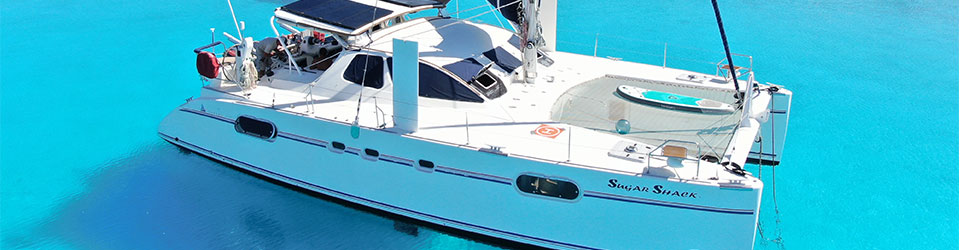
Sugar Shack at Ilot Signal.  Photo Courtesy of Wainani 2026.

Sugar Shack at Ilot Signal. Photo Courtesy of Wainani 2026.

Meet the Kagu: The Bird That Can’t Fly but Can Bark

If you’ve ever wanted to stroll through a tropical forest while being judged by birds and outsmarted by monkeys, the Michael Corbasson Zoological and Forest Park in Nouméa is the place for you. It is home to a large population of New Caledonia’s national bird, the kagu (or cagou or cagu)!

Spanning more than 34 hectares, the park is home to a remarkable collection of New Caledonian birds, wildlife and native plants.

As you wander the shaded trails, you’ll discover giant kaori trees, curious reptiles, playful primates, and a variety of tropical birds. The park serves as an important conservation center, helping to protect many of New Caledonia’s unique species and educate visitors about the island’s extraordinary biodiversity.

Kagu: New Caledonia’s Celebrity

One of the star attractions is the kagu, New Caledonia’s national bird. Found nowhere else on Earth, this flightless bird sports a stylish crest and an unforgettable bark-like call that sounds more watchdog than bird.

These magnificent birds have beautiful striped wings, sporty crests on their head, blood red eyes, and fat gray bodies.  They love to eat meat and worms and have an unusual “bark” squawk. The Kagu make this morning and evening cry sounding remarkably like a bark.

Kagu’s mate for life.  Females lay one egg each year.  The young are raised by their parents for a few years before it moves to another territory to find a new community.

The Zoological And Forest Parc is home to several young Kagu and we were able to spot one!  He not nearly as attractive as his parents, but there is hope yet!

When it feels threatened, it runs quickly and hides. However, they can also fan out their wings and raise their crests if it cannot flee or if it has a chick with it.

I had really wanted to see the kagu with its raised crest but it simply would not cooperate.

Aviary More Than a Zoo

Even though New Caldonians classify this as a zoo it is more of an aviary.  They have an unusually large number of bird exhibits.

But running free throughout the park are hundreds of peacocks.  They even had several albino breeding pairs.

One of my favorite, new birds is the “Cloven-feathered Dove” with furry boots (center bottom image)

So much color in these beautiful feathered friends.

Leaping Lemurs

They have five feisty male lemurs living on their own little island in the zoo.  They were just fed their morning snack and enjoyed showing off their score!

Little Farm

As you enter the Zoological and Forest Parc you first encounter their “little farm.”  It was really kind of funny as they had 1 deer, 1 donkey, 4 rabbits, and 1 pig.

Matt is pointing out the “domestic ass.”

Whether you’re a nature lover, bird enthusiast, or simply looking for a peaceful escape from the city, the Zoological and Forest Park offers a fascinating glimpse into the wild side of New Caledonia.

Find the Zoological and Forest Parc on No Foreign Land.

Our blog posts run 7-8 weeks behind actual live events.

We visited the Zoological and Forest Parc on 17 June 2026.

Big Blue Ocean Passage

After waiting for what seemed like an eternity, we finally left New Zealand on our passage to New Caledonia.

This was the best weather window we had seen in 6 weeks and yet it was not “ideal”.  Forecasts had high winds with gusts in the 30’s and 2-3 meter seas.  

But here we go on this 6 day passage with smiles plastered on our faces.

The first 12-18 hours were terrible!  We had “washing machine” seas that tossed us around like a leaf in a gale force wind.  We were slamming against the sea and rolling all over the waves.

It was not a comfortable period for us or the boat.

Day 2 had more of the same so we went with a double reefed main and double reefed genoa.  Despite having so little canvas up we were sailing at 7-8kts.  On occasion we would surf down a wave at 10-13kts!

Day 3 had wind shifting more after and at reduced speeds.  We actually were able to fly our spinnaker for about 6-7 hours.  It was one of the highlights of the trip!

Norfolk Island is about half way.  Not technically, but close enough.  It is a super tiny island owned by Australia.  Try to find it on the map!

If you look closely you can see two humps in the distance…that is Norfolk Island.

Night Terrors

Inevitably $hit happens at night!  Storms and squalls always occur at night and breakages and traffic rear their ugly heads in the dark.  We had not seen another boat for days and yet we had two different container ships were coming straight for us in the same night!  Seriously?

One of them was so close to us that I had to hail them on the radio and ask them to divert!

Technically, we have right away as we were under sail and he was under engine.  But he is way bigger than us so he could have forced us to divert.  Luckily, both ships moved out of our way.

The Arrival

We tried to slow the boat down on our last night so that we could arrive at the pass at daybreak.  Of course, the wind and the seas were not cooperating!

We de-powered the sails and yet we were still doing 8-9kts.  We would fall off the wind and still doing 8-9kts.  It was ridiculous.

Despite Mother Nature’s efforts to get us here faster, we managed to arrive right at dawn.

I love this shot of Matt and the moon.  Top right is the Amadee lighthouse at the Passe du Bolari Nord which is where we entered.

We had 22-25kt ESE winds and 2m seas as we entered the pass (3 hours after slack tide).  Not ideal conditions, but we wanted in!

We made it though with sails and engines pushing against a 2kt current.

The Amadee Lighthouse

The Lagoon

After this rough passage I just wanted and needed a fairly calm sail through the lagoon to the marina.

But that is not what we got!

We had barely any canvas up (see top left photo) and yet we were flying across the lagoon doing 9kts!  As you can see we had a storm pushing us along.

Passage Report

  • Miles to Destination:  880nm
  • Miles Traveled: 1,040 (see note)
  • Time at Sea (hook to hook):  5 days and 18 hours
  • Average Speed:  7.5kt
  • Max Speed: 14.2kt
  • Hours with Engines:  2.5hrs 

880nm the direct route from NZ to NC if we had followed the “rum line” However, we were trying to get out of the 2kt current and the crappy seas and ended up sailing an extra 160nm!

I can say that we have had worse passages but we have also had better ones.

Let’s just say I am extremely grateful to be on the dock at a marina in New Caledonia!

Fun Facts

This chart shows you our progress during each 24 hour period.  You can see that we sailed a lot further by comparing our “sailed” to “Made Good”.  The Made Good column shows you our progress toward our destination.

Here is another chart showing similar details with boat speed added.

And yet another chart showing VMG (Velocity Made Good) and our best rolling 24 hour stats.

Our blog posts runs 6-7 weeks behind actual live events.

We were on this passage from 6-12 June 2026.