Tag Archives: whangamumu

Whangamumu and Roberton Island

We arrived in Whangamumu harbor around 2:00am, dropped the hook, had a celebratory beer and crashed.  

Jason woke up to a glorious day showcasing the beauty of Whangamumu!

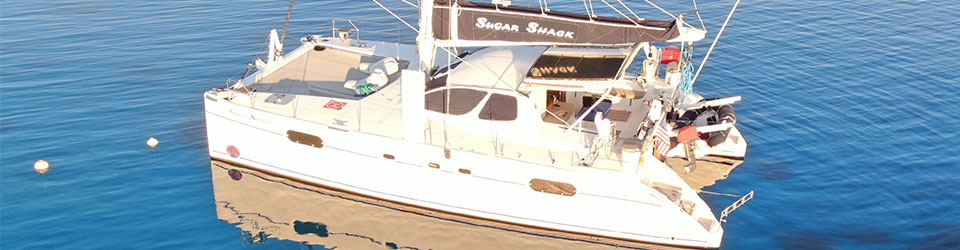
That is Jason sitting on the port helm seat as Matt takes his photo with the drone.

Last month we released a full blog post on Whangamumu and its rich history with whaling.  Be sure to read all about it here.

We took Jason ashore to explore the whaling station and waterfall.

It had not rained recently so the waterfall was not gushing down, but it was still very pretty.  We were able to hike up the falls about 25 meters and just soaked up the beauty.

Sugar Shack had the bay all to herself.  The water gently lapped against the hull, the sun was shining, and everything was so peaceful.

It would have been lovely to hang out here for a few days.

However, we only had a few more days with Jason so we decided to move on to our next stop.

Roberton Bay, Bay of Islands

As you round Cape Brett you pass by two must see spots.  The first is the “hole in the rock on Motukokako / Piercy Island.”  This is an iconic natural attraction.

The peak of the island stands nearly 148 meters high with the top of the archway standing nearly 16 meters high.

Experienced and a little crazy skippers will take their boats and jet skis through the center of the tunnel.

We are content to just pass by on this beautiful day.

We dropped the hook at Robert Island (Motuarohia Island) which is a stunning little island with two lagoons.  

Captain Cook anchored and landed here in 1769.  The Maori’s named this island Motuarohia which means “Island of Loveliness.”

Mother Nature gave us a gorgeous sunset with a full moon on display.  

The sky had so many beautiful colors that it took our breaths away.

Our blog posts run 6-8 weeks behind actual live events.

We visited Whangamumu for a 2nd time with Jason around the end of May 2026.

Whangamumu: Echoes from a Forgotten Whaling Harbour”

Whangamumu is one of Northland’s favorite anchorage.  The bay is large and picturesque, with solid holding, and great hiking treks.

The history of Whangamumu can be considered pretty ugly.  So before we dive into that let me share some beautiful photos of this peaceful anchorage.

Waterfall Hike

Just beside the whaling station is a small path that leads to a waterfall.  Lucky for us it had just rained so the water fall was flowing nicely.  Unlucky for us in that with the rain came some severe storms which caused a mess on the path.

It took us less than 10 minutes to get to the base of the falls.

Matt decided to hike up the falls (in his flip flops) and captured some more photos. 

Can you find me in the left photo and Matt in the right?

The Whaling Station at Whangamumu

Note:  Whaling is now considered abhorrent.  However, back in the day, it was a way to feed families, and provide oil for lighting and more.

This bay is best known for its remote, abandoned whaling station

This was once a bustling industrial site.  It was established in the 1800’s and expanded into a full processing station by 1910.

It was Northland’s longest running whaling operation which finally shutdown in 1940. 

However, rusting machinery and concrete ruins are left behind.  The natural bush is slowly taking over creating an eerie yet beautiful site.

Why was Whangamu’s Whaling Station Unique?

It is believed to be the only whaling station in the world that used nets to catch the whales. 

Most of the operations used boats and harpoons.

During its peak, this operation had processing plants, boilers, slipways, and oil vats that lined the shore. 

Up to 70 whales a year were caught and processed here.  Every part of the whale was used and nothing was wasted.

The whaling station was finally closed due to economic issues and the steep decline in the humpback whale population.

From shore you can just make out the large concrete vats where they used to collect the oil.

We believe this is an old heat exchanger of some sort. 

We were not sure if the concrete wall was added later or if it was part of the original build.

There were lots of bits and pieces on the grounds.  Can you make out what any of them used to do?

There were three signs.  However, only two of them were legible.

The old slip where the men winched the whales to the plant is still partially seen offshore. 

As very sad part of history. 

However, with conservation efforts the humpback whales are  returning to their former glory.

Find Whangamumu on No Foreign Land.

Our blog posts are 6 weeks behind actual live events.  We enjoyed the beautiful bay of Whangamumu around mid-April 2026.